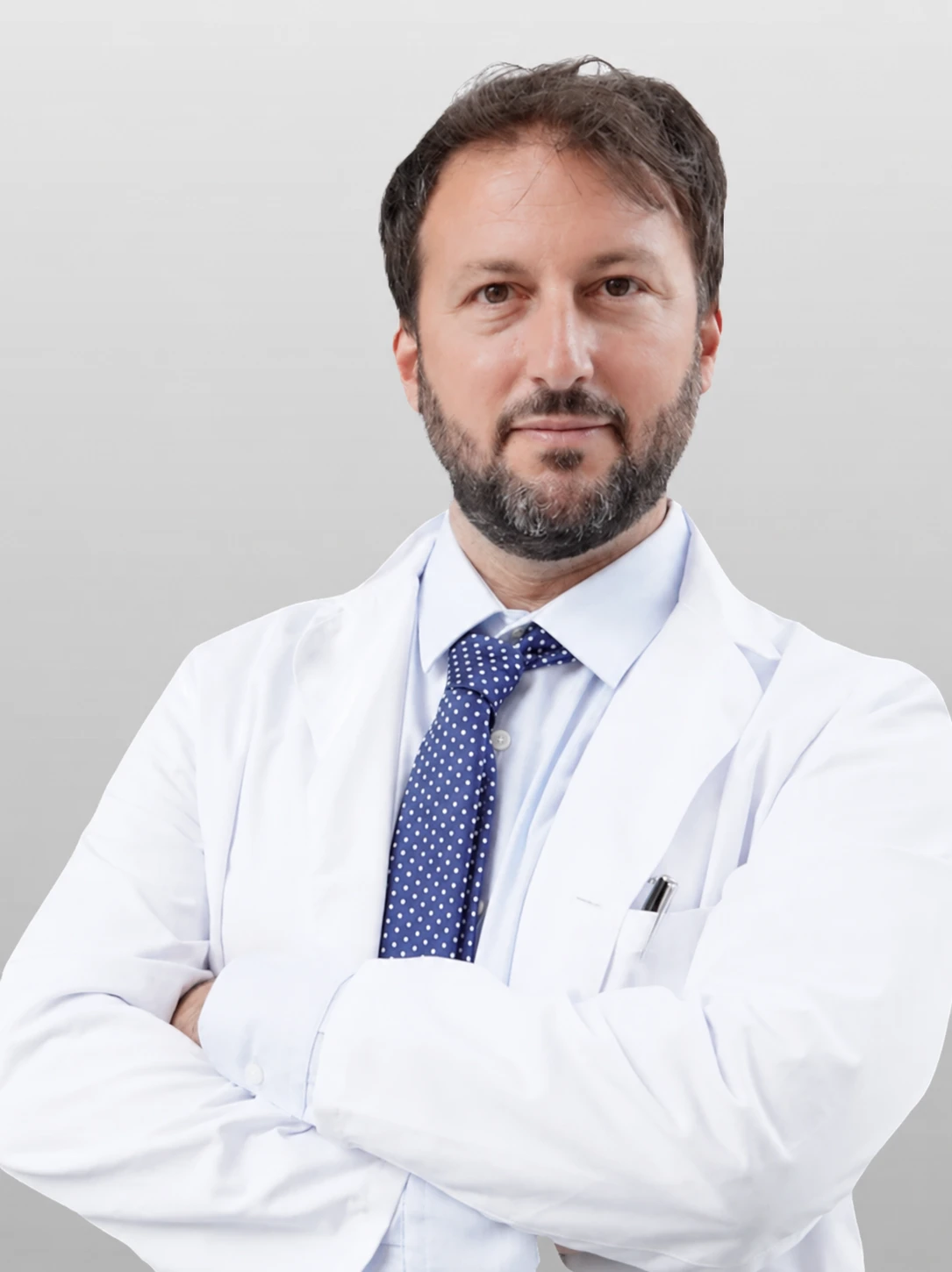
Dr. Pedro Roldán Ramos
Neurosurgeon · Spine, functional and brain surgery
View profile
The Brain & Spine team's spine unit: disc herniation, spinal stenosis, sciatica, spondylolisthesis and scoliosis. Biportal endoscopic surgery, minimally invasive surgery (MIS) and robot-assisted surgery with the Alaya system. We treat national and international patients, with a remote second opinion within 24-48h before you travel.
It is a spine surgery unit that treats patients from all over Spain and from abroad. It is made up of neurosurgeons with subspecialty training in spinal surgery who diagnose and treat cervical and lumbar disc herniation, spinal stenosis, sciatica, spondylolisthesis, adult scoliosis and vertebral tumours. It operates at Hospital El Pilar (C/ Balmes 271) using biportal endoscopy, minimally invasive surgery (MIS) and Alaya robotics.
A spine specialist from the team reviews your MRI and clinical report and replies within 24-48 hours with a concrete plan: conservative, injection-based or surgical. If surgery offers no advantage over conservative treatment, we say so. If you live outside Spain, this assessment is done remotely before any travel: see the pathway for international spine patients.
Percutaneous approach with an endoscopic camera for disc herniations and decompressions. Millimetric incisions, minimal muscle damage and early discharge.
See techniquesMicrodiscectomy, tubular decompression and percutaneous instrumentation. Muscle preservation, less bleeding and faster recovery.
See techniquesPreoperative planning and guided implant placement with a robotic system. Millimetric precision and lower intraoperative radiation.
See techniquesWhat it involves: removal of the disc herniation through a percutaneous approach with an endoscopic camera.
Indications: cervical and lumbar disc herniation, radicular pain.
What it involves: widening of the canal through which the compressed nerve emerges.
Indications: foraminal stenosis, nerve root compression.
What it involves: release of the nerve structures in cases of canal narrowing.
Indications: lumbar or cervical stenosis.
What it involves: removal of a disc herniation through a small incision with the aid of a microscope.
Indications: symptomatic disc herniation.
What it involves: access to the spinal canal using progressive dilators.
Indications: stenosis, nerve compression.
What it involves: placement of screws and fixation systems without large incisions.
Indications: instability, spinal fusion surgery.
What it involves: preoperative planning and guided implant placement using the Alaya robotic system.
Indications: spinal fusion, complex surgery, multilevel cases, revision surgery.
Step 1: preoperative CT or intraoperative 2D/3D imaging. Step 2: trajectory planning on the images. Step 3: guided execution by the robotic arm with a bone reference clamp for real-time tracking. Step 4: radiological verification of position.
ACDF, fusion, laminoplasty, MIS laminectomy, endoscopic surgery, posterior fixation and cervical robotic surgery with Alaya.
See cervicalVertebroplasty, kyphoplasty, MIS laminectomy, thoracic endoscopic surgery, percutaneous fusion and thoracic robotics with Alaya.
See thoracicEndoscopic discectomy, microdiscectomy, MIS fusion (TLIF, PLIF, LLIF, ALIF), hybrid techniques and lumbar robotics with Alaya.
See lumbarIntramedullary tumours, syringomyelia, spinal cord malformations and complex spinal cord conditions with neurophysiological monitoring.
See spinal cordSchwannomas, neurofibromas and conus medullaris tumours. Microsurgical resection with fascicular preservation.
See tumoursWe treat cervical and lumbar disc herniation, spinal canal stenosis and foraminal stenosis, sciatica caused by nerve root compression, spondylolisthesis and instability, adult scoliosis and deformity, osteoporotic vertebral fractures, and vertebral, spinal cord and nerve root tumours.
Endoscopic discectomy and microdiscectomy. Discharge within 24-48h in most cases.
See treatmentACDF, arthroplasty (disc replacement) and laminoplasty depending on the degree of spinal cord compression.
See treatmentDiagnosis of the source of nerve root compression and stepwise treatment, conservative or surgical.
See sciaticaSelective decompression that preserves stability, with or without fusion depending on the case.
See stenosisTwo incisions under 1 cm, without detaching the muscles. Less pain and faster recovery.
See techniqueVertebroplasty, kyphoplasty, percutaneous fixation and correction of adult deformity.
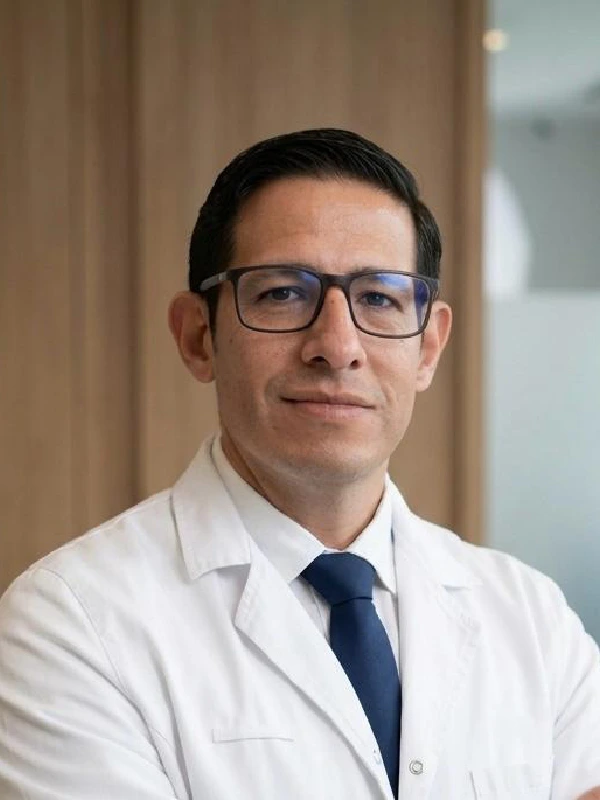
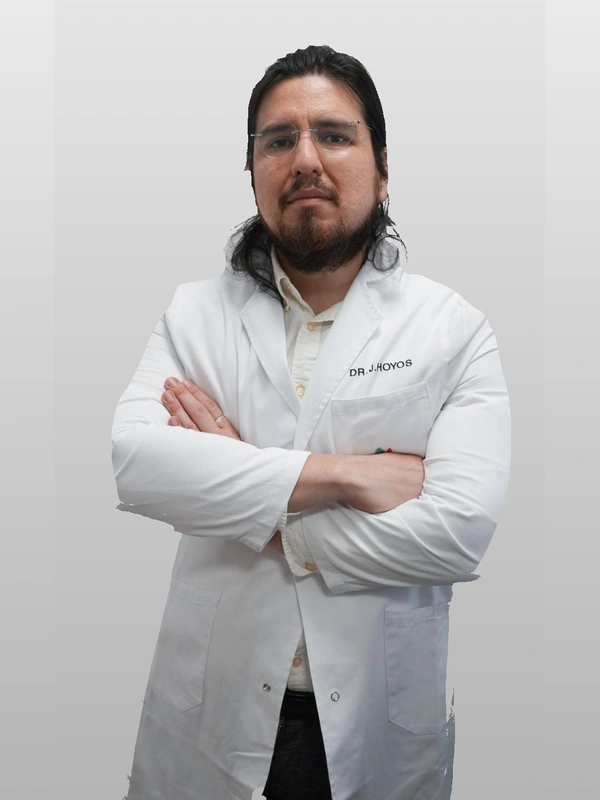
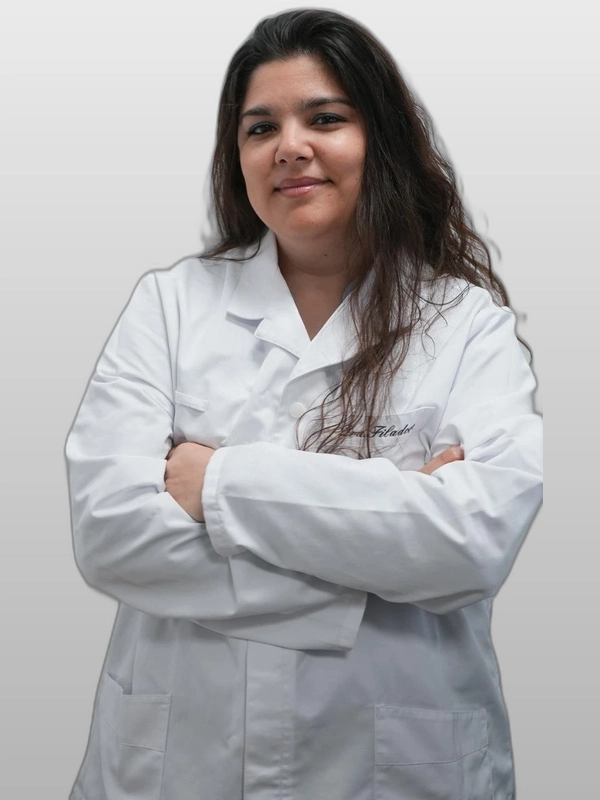
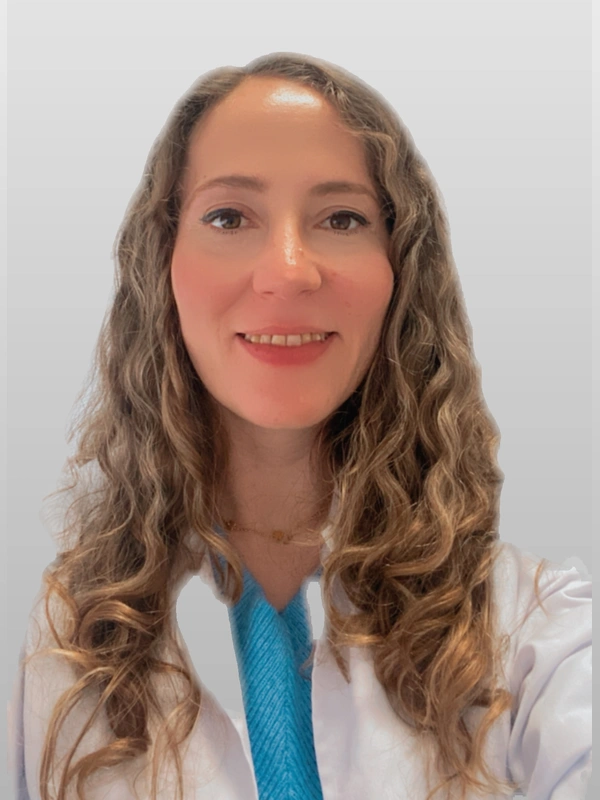
See thoracicSpine cases are handled by neurosurgeons with subspecialty training in spinal surgery, not by a general surgeon. The same specialist who reviews your imaging performs the operation and carries out the follow-up.
The team operates at four hospitals in Barcelona: Hospital El Pilar (C/ Balmes 271), Quirónsalud Aribau, Barnaclínic+ (Hospital Clínic) and Clínica Olivé Gumà. The hospital is chosen according to the complexity of the case, the equipment the technique requires and your insurer.
The hospital matters less than the surgeon: in every case the neurosurgeon who reviews your imaging is the one who operates and who follows you up afterwards. We work with the main insurers and also see self-paying patients without a policy.
Yes. We treat patients from Latin America, Europe and the Middle East through a pathway designed to keep travel to a minimum: imaging review and the treatment decision are handled remotely, and you only travel once the surgical indication is confirmed and the date is fixed.
You send your MRI and your specialist's report. You receive, by email or video call, an assessment with the diagnosis, the realistic treatment options and whether surgery is indicated or not.
If surgery is indicated, you receive a quote covering the technique, the expected hospital stay and the follow-up included, so you can decide without surprises.
In-person consultation and any additional tests on arrival, surgery within the following 48-72 hours, and a typical total stay of 7 to 14 days depending on the technique, including the safety margin before flying.
Video consultations at 6 weeks, 3 months and 12 months, reviewing the X-rays or MRI taken in your own city. Consultations in Spanish, Catalan, English, Italian and Portuguese.
The pathway has four stages: imaging assessment, a shared treatment decision, surgery where indicated, and structured follow-up. For patients travelling from abroad, the first two stages are completed remotely before any trip is scheduled.
Review of the MRI and, where relevant, CT and dynamic flexion-extension X-rays to rule out instability. Imaging is correlated with the neurological examination: a herniation visible on MRI is only operated on if it explains the symptoms.
Conservative options (physiotherapy, medication, injections), percutaneous procedures and surgery are set out with the benefits and risks of each. Reply within 24-48 hours, by email or video call, with no need to travel.
Biportal endoscopy, microsurgery, MIS decompression or instrumented fusion, with navigation and Alaya robotics where screw placement requires it. The surgeon who assessed the case performs the operation.
Discharge within 24-48 hours after endoscopic or microsurgical decompression, and 3-5 days after instrumented fusion. Clinical and radiological review at 6 weeks, 3 months and 12 months, in person or by video call.
Recovery depends on whether the operation only decompresses the nerve or also fuses vertebrae. Endoscopic and microsurgical decompressions allow discharge within 24-48 hours and a return to desk work in 3-4 weeks. Instrumented fusion needs 6 to 12 weeks before normal activity.
These are indicative ranges from our routine practice. Actual timings depend on age, the number of levels operated on, the prior condition of the muscles and whether a neurological deficit was present before surgery.
We use the ALAYA Robotic Assistant (Cyber Surgery) for the precise placement of pedicle screws in spinal fusion surgery, both open and minimally invasive.
ALAYA guides the trajectory of the surgical instruments through a patented kinematic tracking system that requires no optical navigation cameras: it avoids the classic line-of-sight problems and takes up less space in theatre. The patient's position is monitored in real time by a bone reference clamp attached directly to the tracking device, which improves the overall accuracy of the procedure.

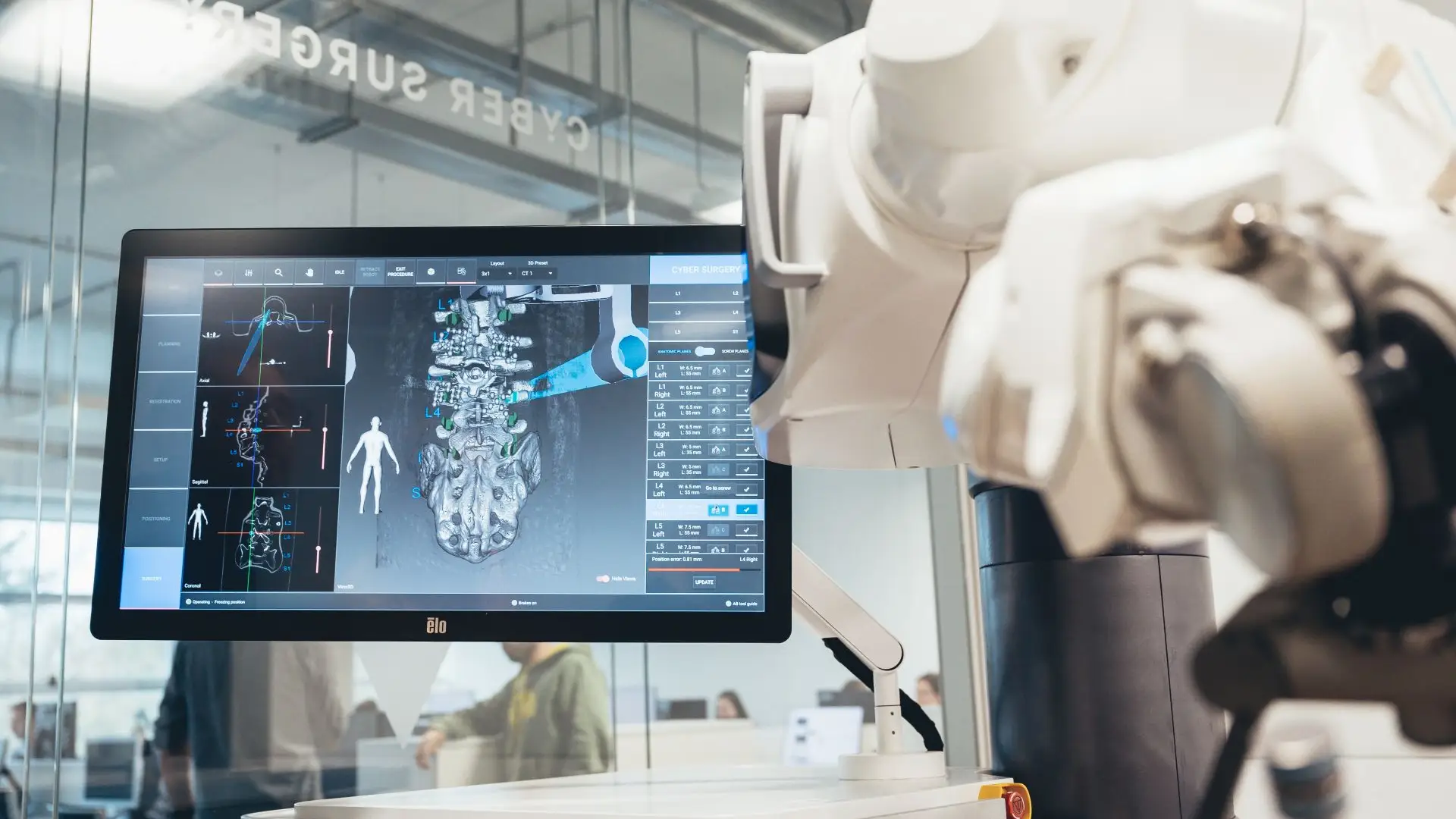
Significantly more accurate pedicle screw placement than with conventional technique.
Less tissue damage, lower risk of infection and faster postoperative recovery.
An intuitive workflow and fast set-up that shorten the length of the procedure.
The system minimises the number of image acquisitions needed during surgery.
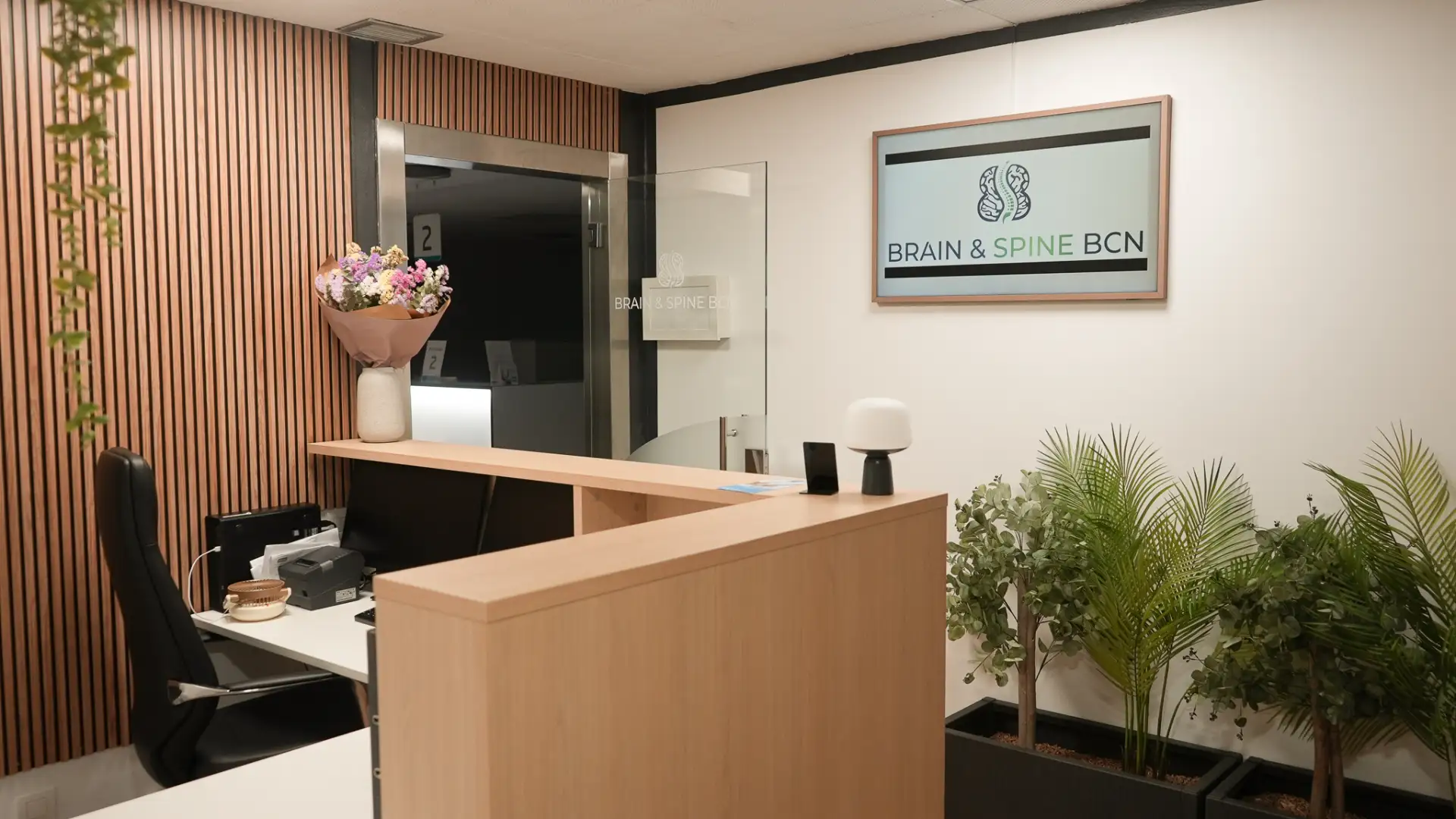
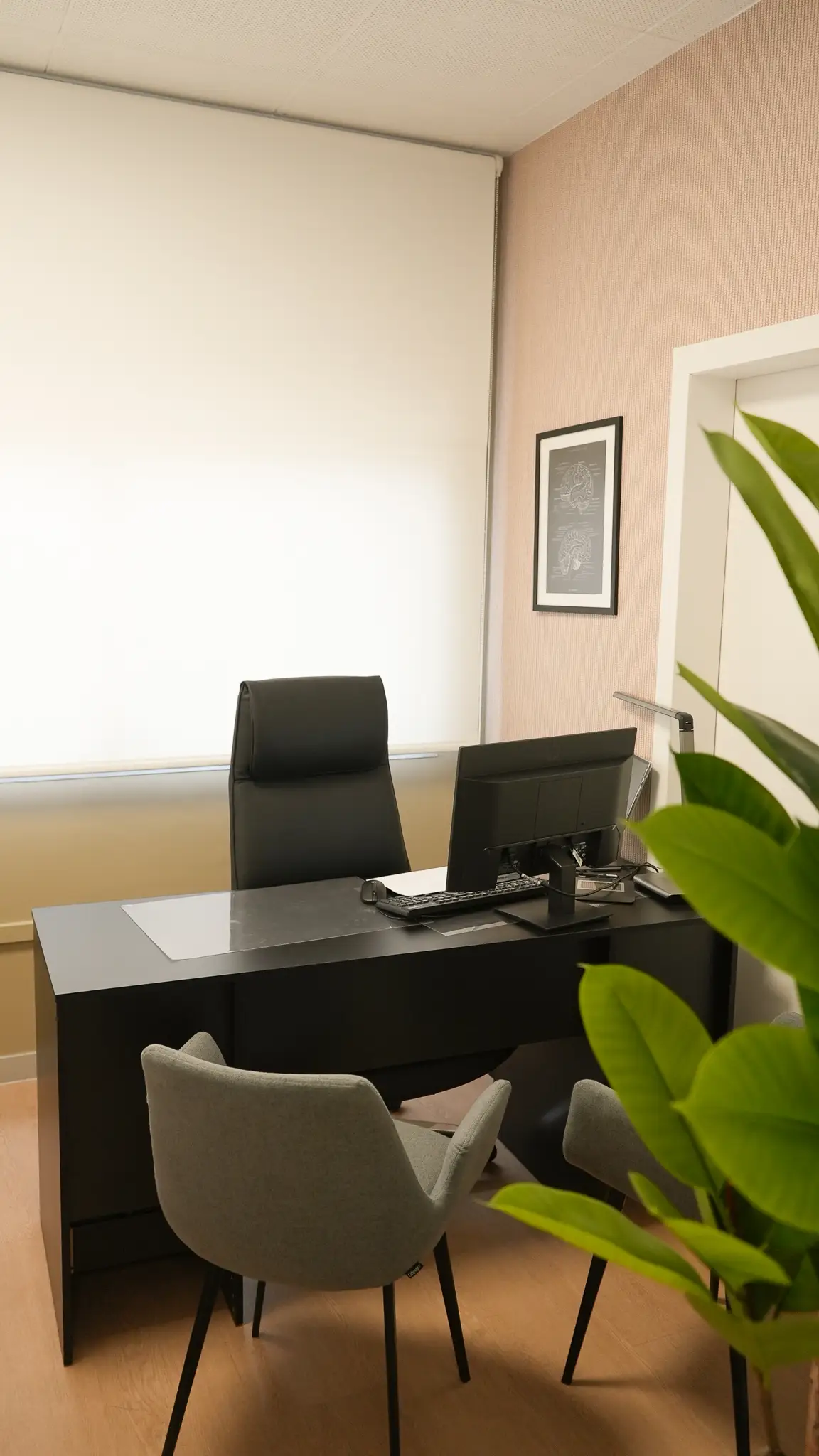
We operate at Hospital El Pilar, Quironsalud Aribau, Barnaclínic+ and Clínica Olivé Gumà, in Barcelona. You are seen by clinical staff, we go through your scans (MRI, CT, reports) with you and we take time to explain the options. There is never more than one patient in the room at a time.
"I arrived with a glioma I had been told was inoperable. Here they reviewed it at the tumour board and offered me a plan. The surgery was a success. Four years on, I am well."
"For years I had a cervical disc herniation, operated on by another team with no improvement. Minimally invasive surgery gave me back my mobility and took the pain away."
"I travelled from outside Spain. The team reviewed my case before I came and gave me a clear plan. Caring people and impeccable technique."
Send us your spinal MRI or CT scan and your specialist report. We will advise you within 24–48h on the best strategy: conservative, endoscopic, MIS or robotic.