Minimally invasive spine surgery for sports injuries
Minimally invasive techniques (MISS) allow treatment of athletes' disc herniations, fractures and spondylolysis through millimetre incisions, with less tissue damage and a faster return to sport. At Brain & Spine Barcelona we combine endoscopic spine surgery, navigation and robotic assistance.
For an athlete, a spinal injury means pain, but also stopping training, losing performance and, often, not knowing whether they will be able to compete again. Minimally invasive spine surgery (MISS) treats the injury with less damage to healthy tissue and allows a faster functional recovery than traditional open surgery.
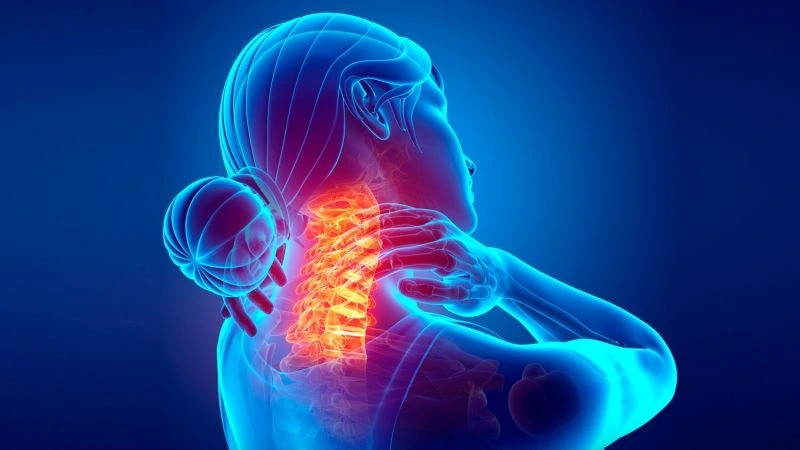
Spinal injuries in athletes
Sport subjects the spine to repeated loads, sudden rotations and impacts that can exceed the adaptive capacity of discs, vertebrae and ligamentous structures. Although many injuries resolve with conservative management, some require surgical assessment.
Disc herniations
These are the most common spinal injury leading to surgery in athletes. The intervertebral disc nucleus shifts and compresses a nerve root, causing referred pain (sciatica or brachialgia), tingling and, in advanced cases, loss of strength. They occur mainly in the lumbar and cervical spine, in sports involving axial loading and repetitive flexion.
Vertebral fractures and stress fractures
High-energy trauma can cause vertebral fractures, while repeated overload generates stress fractures. Careful evaluation of spinal stability is required to decide between conservative treatment and surgical stabilisation.
Spondylolysis and spondylolisthesis
Spondylolysis is a stress fracture of the pars interarticularis, very common in gymnasts, weightlifters, throwers and footballers due to repeated lumbar hyperextension. If it progresses, it can lead to spondylolisthesis (slippage of one vertebra over another) and cause pain and instability that, in selected cases, benefit from surgery.
Why minimally invasive surgery (MISS)?
Classic open surgery requires cutting and retracting the paravertebral musculature to access the lesion, prolonging postoperative pain and recovery. Minimally invasive spine surgery reverses this logic: rather than cutting, it spreads the muscle fibres through dilators and works with specific instruments under magnified microscope or endoscope vision, guided by intraoperative navigation.
This causes less damage to the stabilising muscles, which matter especially in athletes, and return to activity is usually faster. You can find more information in our spine surgery section.
Minimally invasive spine surgery techniques
MISS covers several procedures, and the surgeon chooses one or another according to the injury, its location and the patient's goals.
Endoscopic spine surgery
Through a few-millimetre incision, an endoscope with a high-definition camera and working channel is introduced. It allows removal of a disc herniation or decompression of a nerve root with minimal bleeding and, frequently, on a day-surgery basis. Learn more about endoscopic spine surgery.
Microdiscectomy
Removal of the herniated portion of the disc under an operating microscope through a very small incision. It is a widely used technique for lumbar disc herniation with sciatica, and radicular pain usually improves soon.
Percutaneous fusion (minimally invasive arthrodesis)
When instability or spondylolisthesis is present, affected segments are stabilised using percutaneously placed screws, without large incisions. Reduced muscle aggression allows earlier mobilisation compared with traditional open fusion.
Robotic assistance and navigation
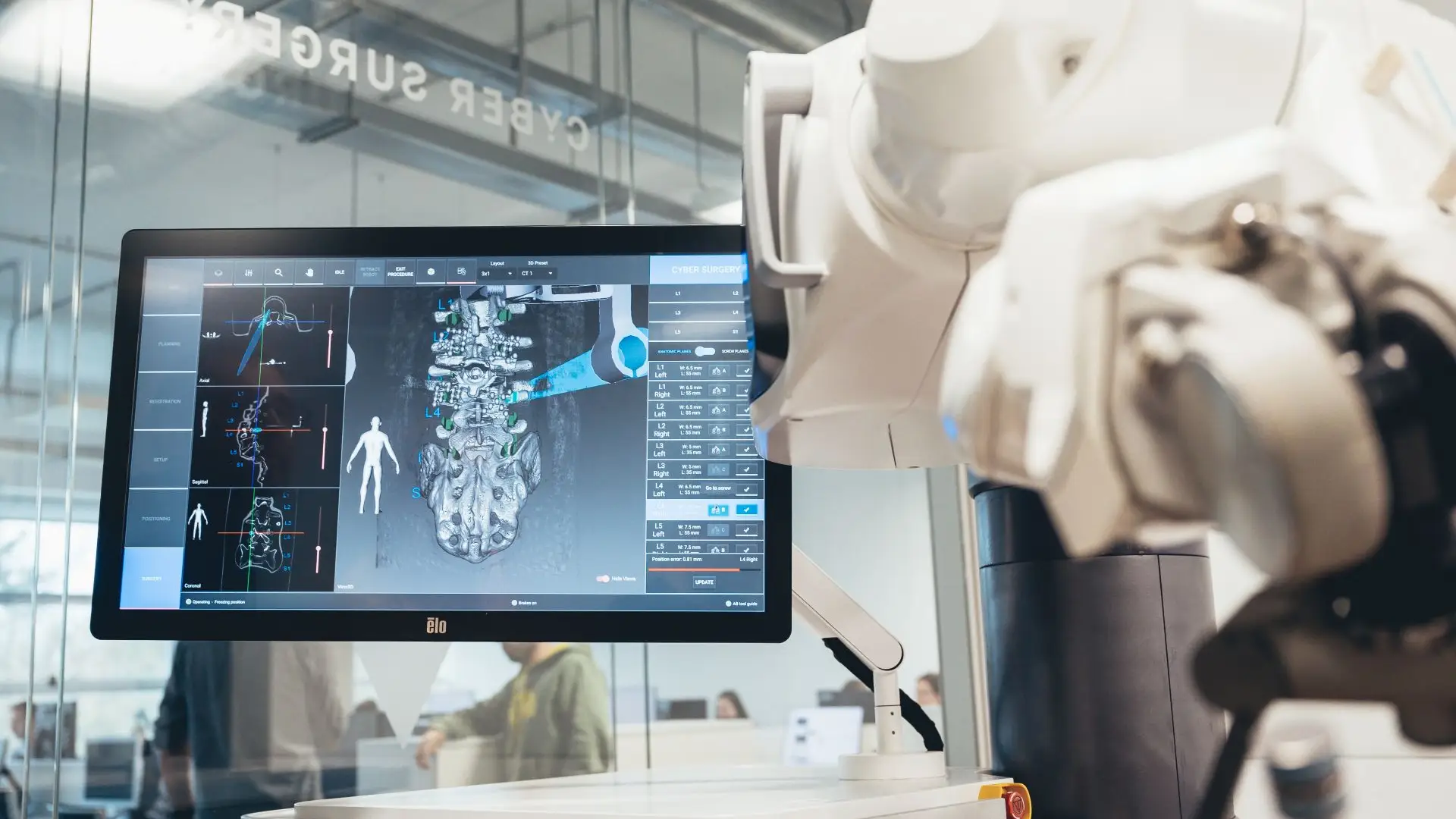
3D planning, navigation and robotic surgery allow implants to be placed with sub-millimetre precision and less intraoperative radiation. They are used mainly in fusions and complex corrections.
Advantages of minimally invasive surgery for athletes
- Less tissue damage: spreading rather than cutting the musculature preserves the spinal stabilisers, which are important for athletic performance.
- Less pain and less bleeding: millimetre incisions reduce postoperative pain and analgesic requirements.
- Lower infection risk: less tissue exposure reduces the risk.
- Short hospital stay: many procedures are day surgery or a single overnight stay.
- Faster recovery and return to sport: rehabilitation can begin earlier and progressive return to activity is shortened.
- Minimal scarring: favourable cosmetic outcome.
Recovery protocol and return to sport
After surgery, recovery is organised around goals. As a general guide, return to sport usually follows these phases:
- Phase 1 - Immediate postoperative (days 0-14): pain management, early mobilisation, postural hygiene and progressive walking.
- Phase 2 - Functional recovery (weeks 2-6): physiotherapy, core and stabiliser muscle reactivation, motor control exercises.
- Phase 3 - Physical conditioning (weeks 6-12): reintroduction of strength, progressive loading and sport-specific movements.
- Phase 4 - Return to sport (from weeks 8-12): gradual return to training and competition based on objective criteria of strength, mobility and symptom-free status.
Timelines vary according to the technique used, the type of sport and individual response. Neurosurgery, rehabilitation and physical conditioning should work in coordination.
When is minimally invasive surgery indicated?
Surgery is not the first step. It is considered when circumstances such as the following are present:
- Disabling pain persisting after 6-8 weeks of well-directed conservative treatment (physiotherapy, pain management, conditioning).
- Progressive neurological deficit: loss of strength, altered sensation or sphincter involvement (emergency).
- Demonstrated spinal instability on imaging.
- Clear correlation between symptoms and MRI or CT findings.
The decision is always individualised and takes into account the location and size of the lesion, overall health status, level of sporting demand and each patient's goals.
Frequently asked questions
What is minimally invasive spine surgery (MISS)?
Which sports-related spinal injuries can be treated with this technique?
When is surgery indicated and when is conservative treatment enough?
How long does it take an athlete to return to training after MISS?
What are the advantages of endoscopic spine surgery over open surgery?
Does robotic assistance improve outcomes in spine surgery?
Who is a candidate for minimally invasive spine surgery?
Where is this surgery performed in Barcelona?
Have you suffered a spinal sports injury?
Our neurosurgery team in Barcelona can assess your case and guide you on minimally invasive surgery options and your return to sport.
Did you find this article useful?
Add us as a preferred source on Google and our articles will show up sooner in your searches.