A single session
Between 90 minutes and 2 hours. The entire procedure takes place inside the MRI scanner, with the patient awake and cooperating with the medical team.
Neuro-HIFU treats tremor without opening the skull. More than 1,000 ultrasound beams guided by MRI converge on a millimetre-sized point in the brain, without incisions and with an immediate effect. If the tremor is part of Parkinson's disease, the specific page is HIFU for Parkinson's.
At Brain & Spine Barcelona, our team of specialists in movement disorders offers Neuro-HIFU to patients with medication-refractory essential tremor and tremor-dominant Parkinson's disease. The technique is approved in Europe (CE marking) and by the FDA in the United States. More than 150 patients have already been treated with this technique by our team.
Unlike conventional neurosurgery, there is no incision or craniotomy: ultrasound waves pass through the skull and converge on a point in the brain with sub-millimetre precision thanks to real-time MRI guidance.
The defining characteristics of Neuro-HIFU compared with other surgical options for movement disorders:
Between 90 minutes and 2 hours. The entire procedure takes place inside the MRI scanner, with the patient awake and cooperating with the medical team.
Tremor improvement is observed as soon as the procedure ends. The patient notices the change in the same room: they can hold a glass, drink water, or write their name again.
No incisions, no overnight stay. After 2-4 hours of monitoring, the patient goes home on their usual medication and resumes normal life within 24 hours.
Initial assessment and follow-up by video consultation for patients from other regions or abroad. Some preparatory tests can be coordinated with your home hospital.
Neuro-HIFU treatment involves placing a high-intensity focused ultrasound helmet on the patient's head. More than a thousand beams converge on a rice-grain-sized point in the brain, the Vim nucleus of the thalamus, raising its temperature just enough to disrupt the circuit responsible for tremor.
Millimetre precision is achieved because the procedure is performed inside a high-field MRI scanner (3 Tesla), which allows real-time confirmation of target, trajectory, and temperature.
The patient remains awake throughout and notices improvement as the treatment progresses. As an outpatient procedure, they go home a few hours after the intervention and resume normal life almost immediately.
HIFU is the clinical name for high-intensity focused ultrasound guided by MRI (HIFU / MRgFUS). It is an ablative neurosurgical technique that creates a millimetre-sized thermal lesion at a precise brain target, usually the Vim nucleus of the thalamus, to disrupt the circuit responsible for tremor.
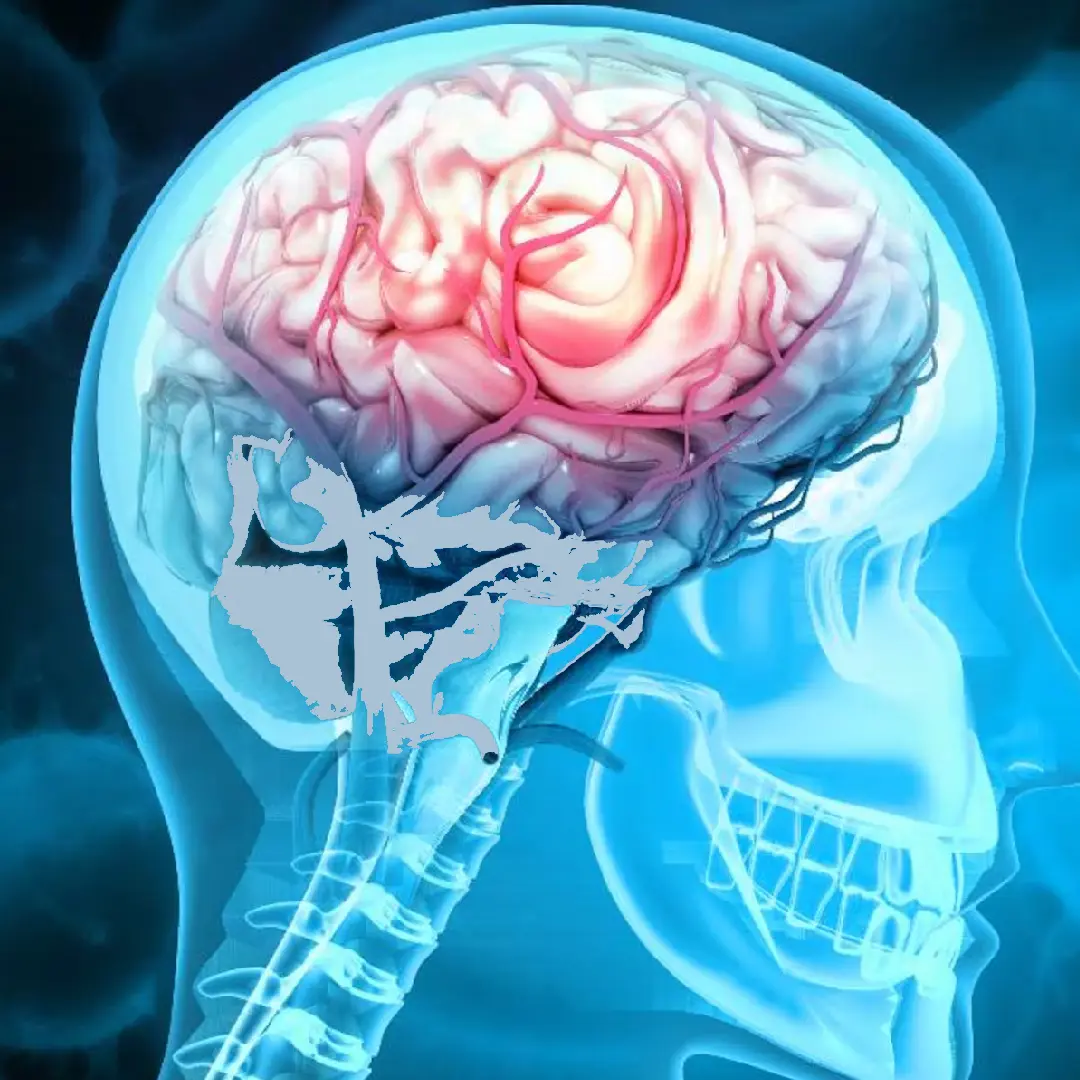
"MRI-guided focused ultrasound is an effective and safe therapeutic option for refractory essential tremor and tremor-dominant Parkinson's disease, with the advantage of requiring neither incisions nor implants."
Joint assessment by neurology and functional neurosurgery. Diagnosis confirmed (essential tremor or tremor-dominant Parkinson's disease), motor scales applied (CRST for essential tremor, MDS-UPDRS for Parkinson's), and brain MRI checked for compatibility with the HIFU system.
Complete head shaving (required for uniform transducer contact), placement of the stereotactic frame under local anaesthesia, and fixation to the MRI scanner. The patient is awake and cooperative throughout.
MRI images are acquired to precisely identify the Vim nucleus of the thalamus on the side contralateral to the tremor. The path the ultrasound beams will take through the skull is calculated.
Low-energy ultrasound pulses that gently warm the target without causing a lesion. The patient's clinical response is evaluated in real time (handwriting, arm reach, balance). If tremor improves without adverse effects, the target is confirmed. If unwanted effects appear, the target is repositioned.
Energy is gradually increased until the definitive thermal lesion is created (55-60 °C at the focus). The patient confirms persistent improvement and the absence of adverse effects.
2-4 hours in the recovery room to verify neurological stability, removal of the stereotactic frame, and a control MRI. Same-day hospital discharge with tremor improvement already established.
Dr. Pedro Roldán walks through a HIFU session step by step, with no incisions. Video in Spanish.
HIFU is indicated in patients with disabling tremor refractory to medication, in two main clinical contexts:
If you have essential tremor and present these symptoms, you may be a candidate:
If you have Parkinson's disease with predominant tremor, you may benefit:
Both techniques treat the same disorders but are very different. The choice depends on the clinical profile, age, patient preferences, and comorbidities.
| Aspect | HIFU | DBS |
|---|---|---|
| Incisions | None | Yes, minimal craniotomy + abdominal incision for battery |
| Anaesthesia | Local · patient awake | General for generator implantation |
| Hospital admission | Same-day discharge | 1-3 days |
| Reversibility | Permanent (thermal lesion) | Reversible and adjustable |
| Sides treatable | Unilateral (per session) | Bilateral |
| Implant to maintain | No | Yes, battery replaced every 3-5 years |
| Best for | Unilateral tremor · older patients · contraindication to open surgery | Bilateral · complex Parkinson's · need for continuous adjustment |
Our recommendation: the multidisciplinary committee assesses each case individually. Some patients are clearly best served by HIFU; others benefit more from DBS. Learn more about DBS
If you have essential tremor or tremor-dominant Parkinson's disease that does not respond to medication, we can assess your case remotely. We provide initial feedback within 24-48 h of receiving your reports and MRI.
These are the points to consider when choosing a centre for HIFU treatment:
Dr. Pedro Roldán dedicates a large part of his practice to functional neurosurgery: HIFU, DBS, radiofrequency thalamotomy, and epilepsy surgery. HIFU requires specific expertise; it is not a one-off procedure.
Your case is assessed by a team comprising neurology (movement disorders), functional neurosurgery, neuropsychology, and neuroradiology, not a single clinician. The indication is discussed before the technique is proposed.
The team has treated more than 150 patients with Neuro-HIFU. That experience helps to select candidates better.
From first contact through to discharge and follow-up. We coordinate preliminary tests, anaesthetic assessment, the procedure itself, and scheduled reviews at 1, 3, 6, and 12 months with clinical scales and objective imaging.
We assist national and international patients, coordinating travel, accommodation, transfers, and communication with the patient's home medical team. Video consultations in Spanish, English, and French.
If HIFU is not the best option for your case, we say so clearly and guide you towards the right alternative (DBS, medication adjustment, another technique). Our goal is to solve your problem, not to perform a particular procedure.
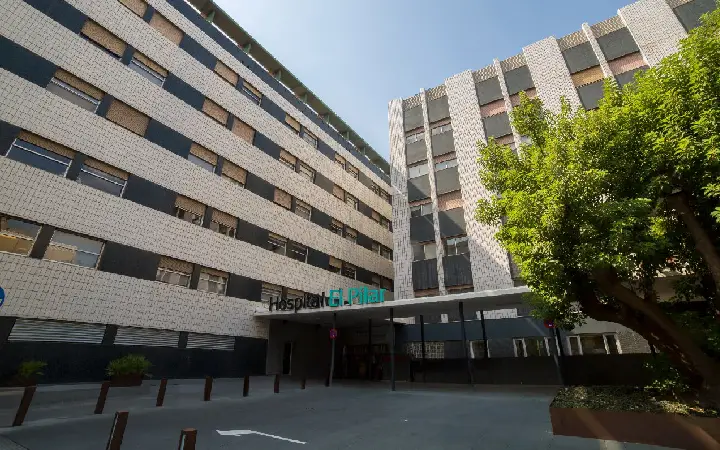
Neuro-HIFU treatment is performed at Hospital El Pilar, a private hospital in Barcelona where the Brain & Spine team carries out its surgical activity.
Private hospital in Barcelona equipped with a compatible 3 Tesla MRI scanner and the surgical infrastructure required to perform Neuro-HIFU treatment.
1. First contact. We review your case using the clinical information you send us to confirm whether you meet the initial criteria: a diagnosis of Parkinson's disease or essential tremor, no devices incompatible with MRI, and no significant claustrophobia.
2. Neurology consultation and skull CT. Neurocognitive assessment and CT scan to measure skull bone density and determine the technical feasibility of treatment.
3. Pre-anaesthetic tests. Blood tests, ECG, and chest X-ray so the anaesthetic team can assess your physical fitness before the session.
4. 3 T MRI, tractography, and volumetry. Precise identification of the brain point at which the ultrasound will be applied, while avoiding surrounding structures.
5. Neuro-HIFU session. Between 1.5 and 2 hours inside the MRI scanner. The patient is awake and a neurosurgeon evaluates the clinical response in real time before applying the definitive lesion.
6. Follow-up. Scheduled consultations and imaging to confirm the result and monitor progress in the short and medium term.
Neuro-HIFU is indicated for action tremor in essential tremor and resting tremor in tremor-dominant Parkinson's disease in patients with an insufficient response to medication. In selected cases it is also used for focal dystonia and refractory central neuropathic pain.
It is not effective for rigidity, bradykinesia, or non-motor symptoms of Parkinson's disease, which require standard pharmacological treatment and, in some cases, other surgical techniques such as deep brain stimulation (DBS).
In unilateral essential tremor, published studies describe tremor reductions of 60-75% immediately after treatment, with benefit maintained in more than 50% of patients at 5 years. In tremor-dominant Parkinson's disease, improvement on the treated side is comparable. Functional recovery, including handwriting, eating with cutlery, and drinking without spilling, is typically immediate at discharge.
No. Neuro-HIFU creates a definitive thermal lesion without implanting anything and treats one side of the body per session. DBS implants deep electrodes and a subcutaneous generator: it is reversible, adjustable over time, and allows bilateral treatment. Each technique has its own indication and is decided on a case-by-case basis in a multidisciplinary committee. Learn more about DBS
Most side effects are mild and transient. The most common during or immediately after the session are headache, dizziness, nausea, a sensation of heat in the head, and paraesthesia (transient tingling) in the hand or face on the treated side. These usually resolve within minutes or hours.
In a small proportion of patients, mild paraesthesia, balance disturbance, or some difficulty with fine motor coordination may persist for weeks or months. Serious side effects are uncommon thanks to real-time thermal control by MRI.
The entire procedure is performed with low-power test sonications before the definitive lesion, allowing the target to be repositioned if an adverse effect appears, thereby minimising risk.
The patient goes home the same day, after 2-4 hours of observation. For the first 24-48 hours it is generally advisable to rest and avoid strenuous physical activity. Usual medication is resumed as directed by the team.
Most patients return to normal life within 24-48 hours: social activity, walking, reading, and normal eating. Mild fatigue during the first week is common.
We schedule follow-up reviews at one week, one month, and at 3, 6, and 12 months, with imaging and clinical scales to document the stability of the result.
The thermal lesion produced by HIFU is permanent, but tremor may partially recur in a minority of patients over the years, particularly in essential tremor. Available studies describe maintenance of benefit in more than 50 % of patients at 5 years. If a clinically relevant recurrence occurs, retreatment with HIFU or deep brain stimulation (DBS) as a second-line option may be considered.
Neuro-HIFU treatment is currently unilateral: in one session the thalamus contralateral to the most affected side of the body is targeted. Creating bilateral lesions simultaneously or in close succession has classically been associated with a higher risk of side effects on speech, balance, and swallowing.
Staged bilateral treatment is in advanced clinical trials but is not yet standard outside research protocols. If your tremor is clearly bilateral and disabling on both sides, we will discuss during your assessment whether HIFU is the best option or whether bilateral DBS should be considered.
There is no formal age limit. In fact, HIFU is particularly useful for older patients for whom craniotomy or DBS implantation carries significant anaesthetic or surgical risk, since it is performed under local anaesthesia with same-day discharge. What matters is not chronological age but the patient's functional and cognitive status, the absence of MRI contraindications, and skull bone density compatible with the technique.
Yes. Situations that may contraindicate treatment include:
Usually between 4 and 8 weeks, depending on the availability of investigations (skull CT, 3 T MRI, anaesthetic assessment) and the patient's schedule. For international or out-of-region patients, we coordinate part of the preparatory tests with their home hospital to reduce travel.
Yes. We see national and international patients. You can send us your reports and imaging for an initial assessment without travelling. If we consider you a potential candidate, we arrange a video consultation with the team and only ask you to travel to Barcelona when strictly necessary for tests that cannot be coordinated remotely. Request a remote assessment
The cost depends on the investigations required (CT, 3 T MRI, pre-anaesthetic tests), the type of treatment, and the follow-up plan. After the initial assessment we provide a detailed, personalised quote. For international patients we also coordinate the logistical aspects of travel and accommodation. Contact our team for specific information about your case.
The main clinical trials on HIFU have been published in journals such as The New England Journal of Medicine, JAMA Neurology, and The Lancet Neurology. These are the publications that guide our practice.
These references are a selection of the published literature. The specific clinical detail of your case will be discussed in consultation based on your investigations and history.
The management of Parkinson's disease, tremor and movement disorders combines functional surgery (HIFU, DBS) with specialist movement disorder neurology assessment, both before and after the procedure.
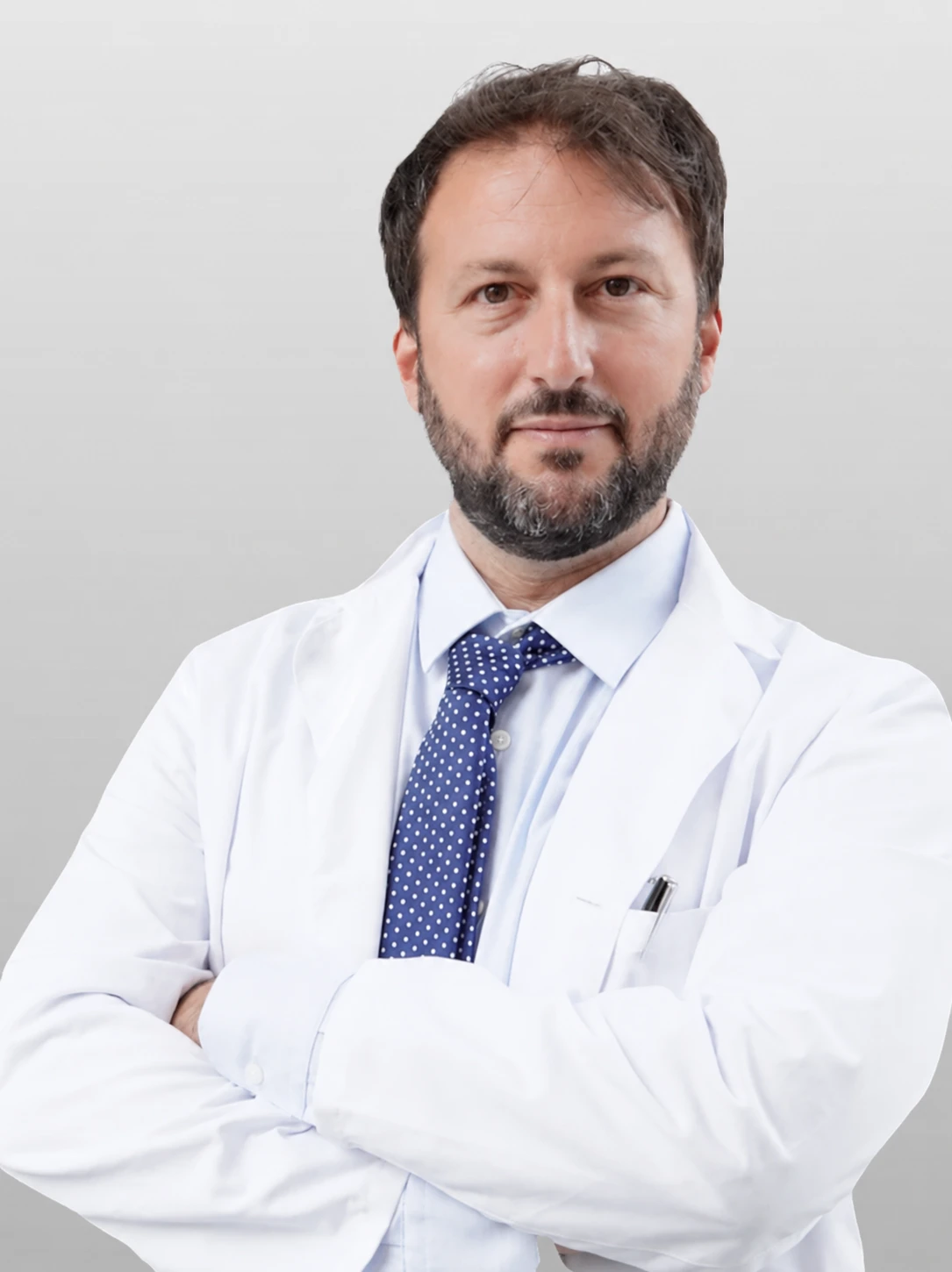

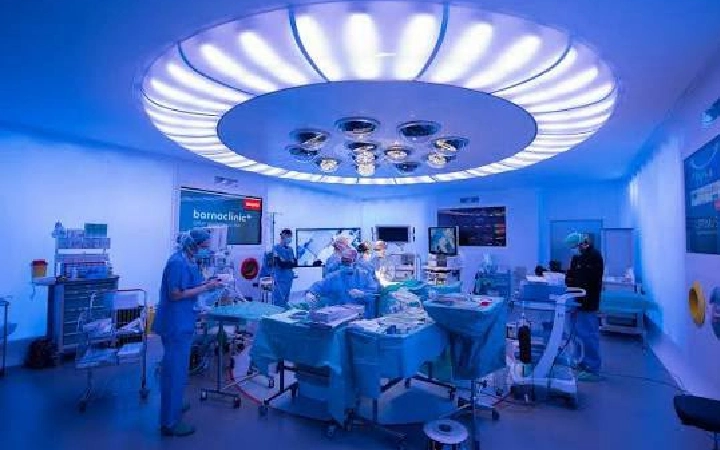
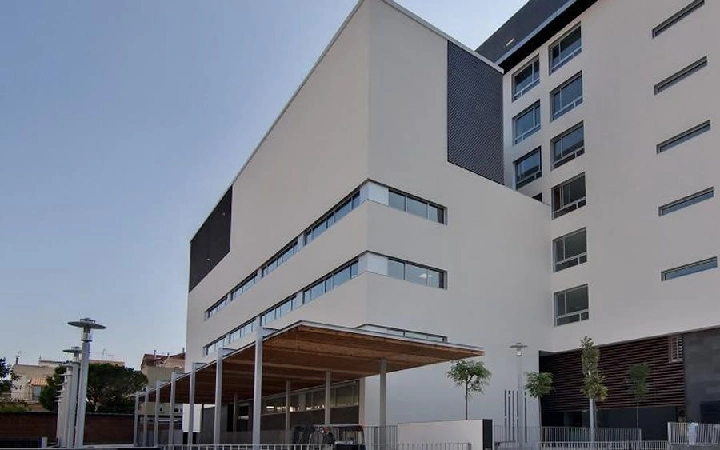
Surgical procedures are carried out in operating theatres equipped with the technology required for HIFU. Your first consultation and follow-up can take place at any of our centres in Barcelona.
"I arrived with a glioma I had been told was inoperable. Here they reviewed it at the tumour board and offered me a plan. The surgery was a success. Four years on, I am well."
"For years I had a cervical disc herniation, operated on by another team with no improvement. Minimally invasive surgery gave me back my mobility and took the pain away."
"I travelled from outside Spain. The team reviewed my case before I came and gave me a clear plan. Caring people and impeccable technique."
Send us your reports and brain MRI scans. We will review them in a multidisciplinary committee (neurology + functional neurosurgery) and let you know within 24-48 h whether HIFU is the best option for your case.