Dr. Pedro Roldán Ramos
Neurosurgeon · Robotic spine and functional surgery
View profile
Robotic arm integrated with neuronavigation and preoperative 3D planning. Submillimetric precision in pedicle screw placement, deep electrodes and complex surgical trajectories.
Robotic surgery does not replace the surgeon: it assists them. Based on a prior 3D surgical plan, the robotic arm guides instruments with a precision that is hard to achieve freehand. The neurosurgeon maintains full control at all times and can correct the trajectory in real time.

High-resolution CT and/or MRI of the segment to be operated. For the spine, CT is used; for the brain, it is fused with functional MRI or DTI tractography when eloquent areas are nearby.
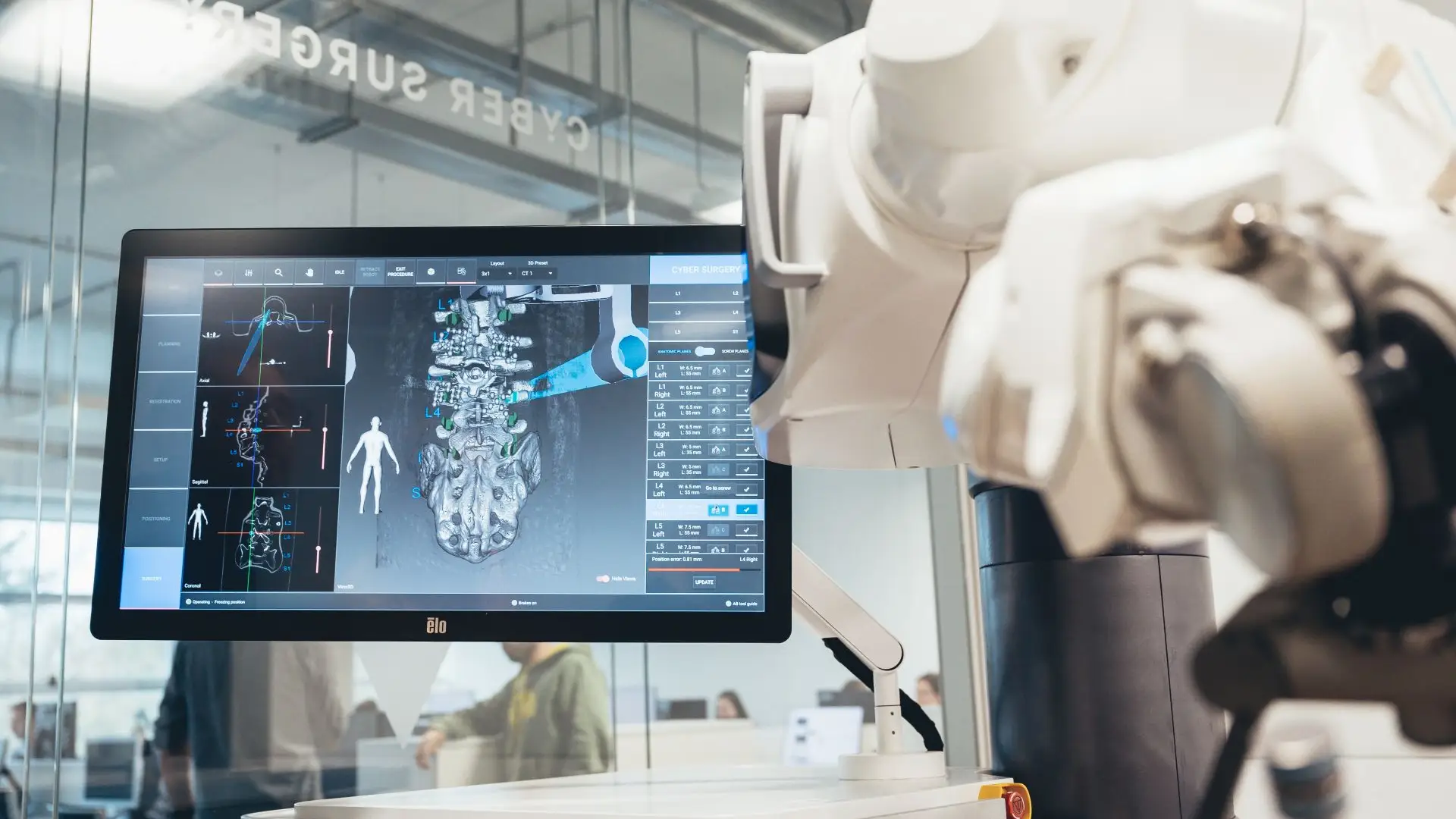
3D reconstruction of the segment. The surgeon draws each trajectory (pedicle screws, electrodes, biopsy) on the model and the software verifies that they respect cortical boundaries, vessels and neural structures.
In the operating theatre, a 2D/3D intraoperative CT is performed. The tracking system (bone reference clamp in ALAYA, without optical cameras) aligns the preoperative map with the patient's real anatomy in real time.
The robotic arm is automatically positioned at each planned trajectory with ±0.3 mm precision. The surgeon inserts the instrument through the robotic guide, maintaining manual control of pressure and depth.
Intraoperative radiological check (CT or fluoroscopy) to confirm correct positioning of each implant before completing the surgery.
The robotic guide makes it possible to use less fluoroscopy during surgery, with less radiation exposure for the patient and surgical team than with the conventional technique.
We use the ALAYA Robotic Assistant (Cyber Surgery) for the precise placement of pedicle screws in spinal fusion surgery, both open and minimally invasive.
ALAYA guides the trajectory of the surgical instruments through a patented kinematic tracking system that requires no optical navigation cameras: it avoids the classic line-of-sight problems and takes up less space in theatre. The patient's position is monitored in real time by a bone reference clamp attached directly to the tracking device, which improves the overall accuracy of the procedure.
Significantly more accurate pedicle screw placement than with conventional technique.
Less tissue damage, lower risk of infection and faster postoperative recovery.
An intuitive workflow and fast set-up that shorten the length of the procedure.
The system minimises the number of image acquisitions needed during surgery.
"I arrived with a glioma I had been told was inoperable. Here they reviewed it at the tumour board and offered me a plan. The surgery was a success. Four years on, I am well."
"For years I had a cervical disc herniation, operated on by another team with no improvement. Minimally invasive surgery gave me back my mobility and took the pain away."
"I travelled from outside Spain. The team reviewed my case before I came and gave me a clear plan. Caring people and impeccable technique."
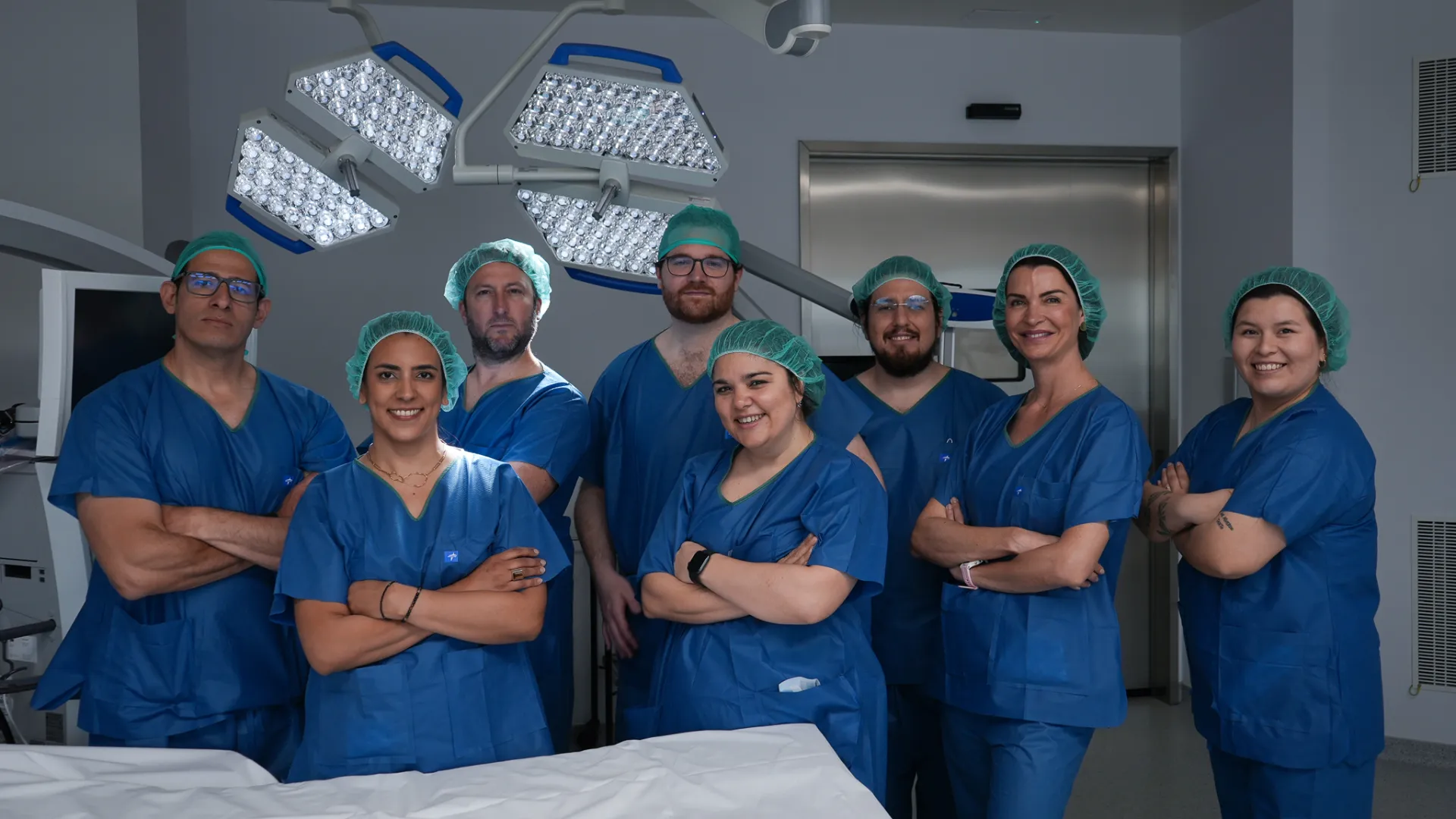
We send your case to the committee to decide which technique is most suitable.