Persistent sciatica: warning signs that you need a neurosurgeon
Most sciatica is benign and gets better on its own, but some specific signs indicate that the nerve is suffering real damage. Recognising them in time improves the outlook for recovery.
Most sciatica improves with conservative treatment, but some signs indicate that the nerve root or spinal cord is suffering and that surgery should be considered without delay. The main signs are: loss of strength in the leg or foot that is getting worse (for example, the foot not responding when walking on tiptoe or on the heels), numbness in the groin, genitals or inner thighs (saddle anaesthesia), and loss of bladder or bowel control. This last combination may correspond to cauda equina syndrome, a neurosurgical emergency that is operated on within hours. Pain that does not ease at all after 6 to 8 weeks of correct treatment, or that persistently wakes you at night, is also a reason for review. If any of these signs appear, an urgent specialist assessment is advisable.
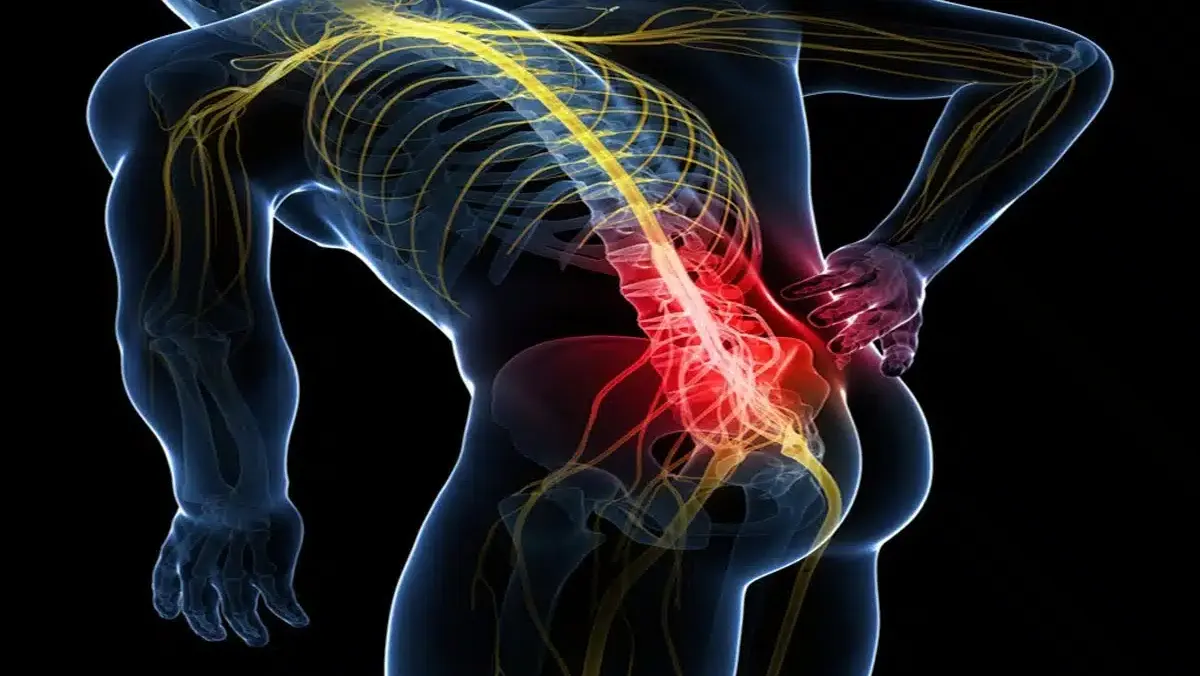
Why these signs matter
Ordinary sciatica is a pain problem. Warning signs indicate something different: besides the pain, the nerve is starting to lose function. When that happens, time matters, because recovering strength and sensation depends on relieving the compression before the damage becomes permanent.
The red flags, one by one
- Progressive loss of strength: weakness lifting the foot, tripping, difficulty climbing stairs. If it gets worse from one day to the next, do not wait.
- Saddle anaesthesia: loss of sensation in the area that would touch a saddle (perineum, genitals, inner thighs).
- Bladder or bowel changes: difficulty urinating, leakage or loss of bowel control.
- Uncontrollable pain: sciatica that does not ease despite correctly scheduled pain relief.
The combination of saddle anaesthesia and bladder or bowel changes points to cauda equina syndrome, which is a surgical emergency.
What is done about these signs
An urgent MRI scan is requested to locate the compression and, depending on the findings, decompressive surgery is considered. For a herniated disc, this is usually a microdiscectomy; for stenosis, a decompression of the canal. Acting quickly improves the outlook for neurological recovery.
You can read more about sciatica and when surgery is considered in Sciatica: why it hurts and when to operate.
Related information
Frequently asked questions
Is a bit of tingling in the leg an emergency?
Mild, stable tingling is normally not. The concern is if it increases, comes with loss of strength or affects the genital area and bladder or bowel control.
How long can I wait if I have loss of strength?
It is best not to wait. Weakness that is getting worse should be assessed within days, not weeks.
Is cauda equina syndrome always operated on?
Yes, it is one of the few surgical emergencies of the spine: the sooner it is decompressed, the better the prognosis.
Do you have any of these signs?
Request a specialist assessment without delay. The team reviews your case and tells you the next steps.
Did you find this article useful?
Add us as a preferred source on Google and our articles will show up sooner in your searches.